Can't find what you want?
Augustus Saint-Gaudens Double Eagle and Commemorative Silver Medal 2pc Set
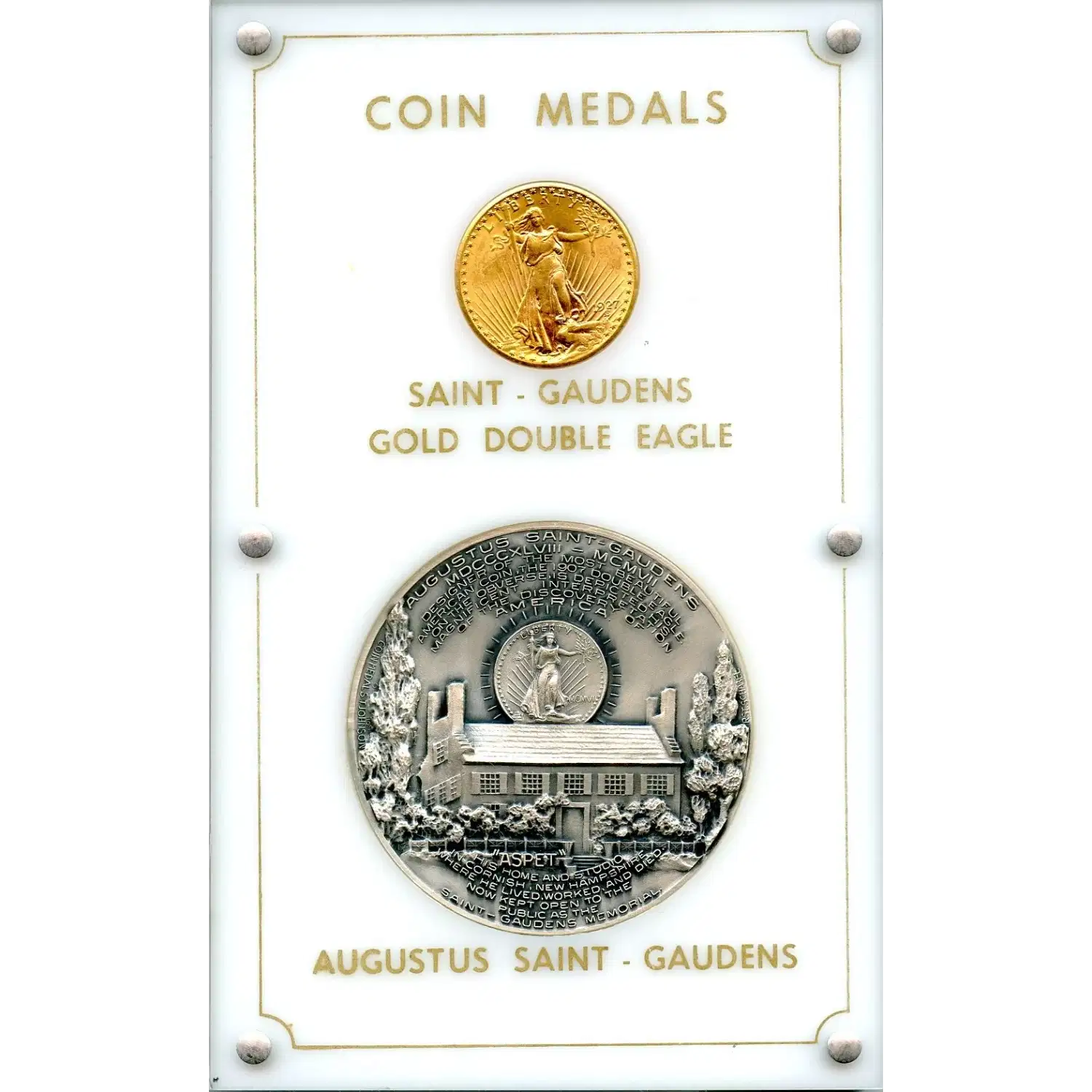
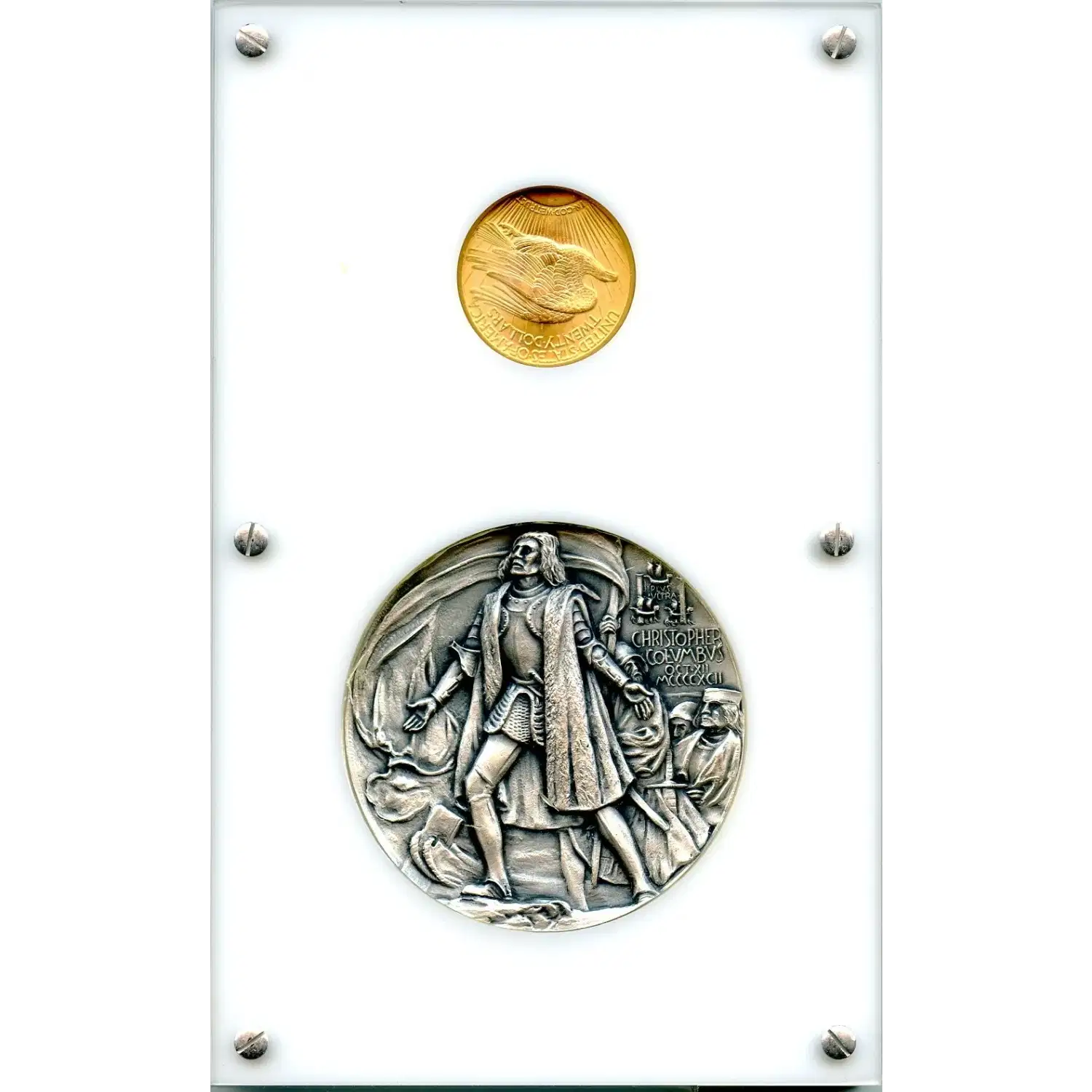
This is a "Coin Medals" presentation set: a gold double eagle paired with a large silver art medal, both mounted in a white acrylic holder with gold lettering. The medal reproduces two of Augustus Saint-Gaudens's best-known works.
Description:
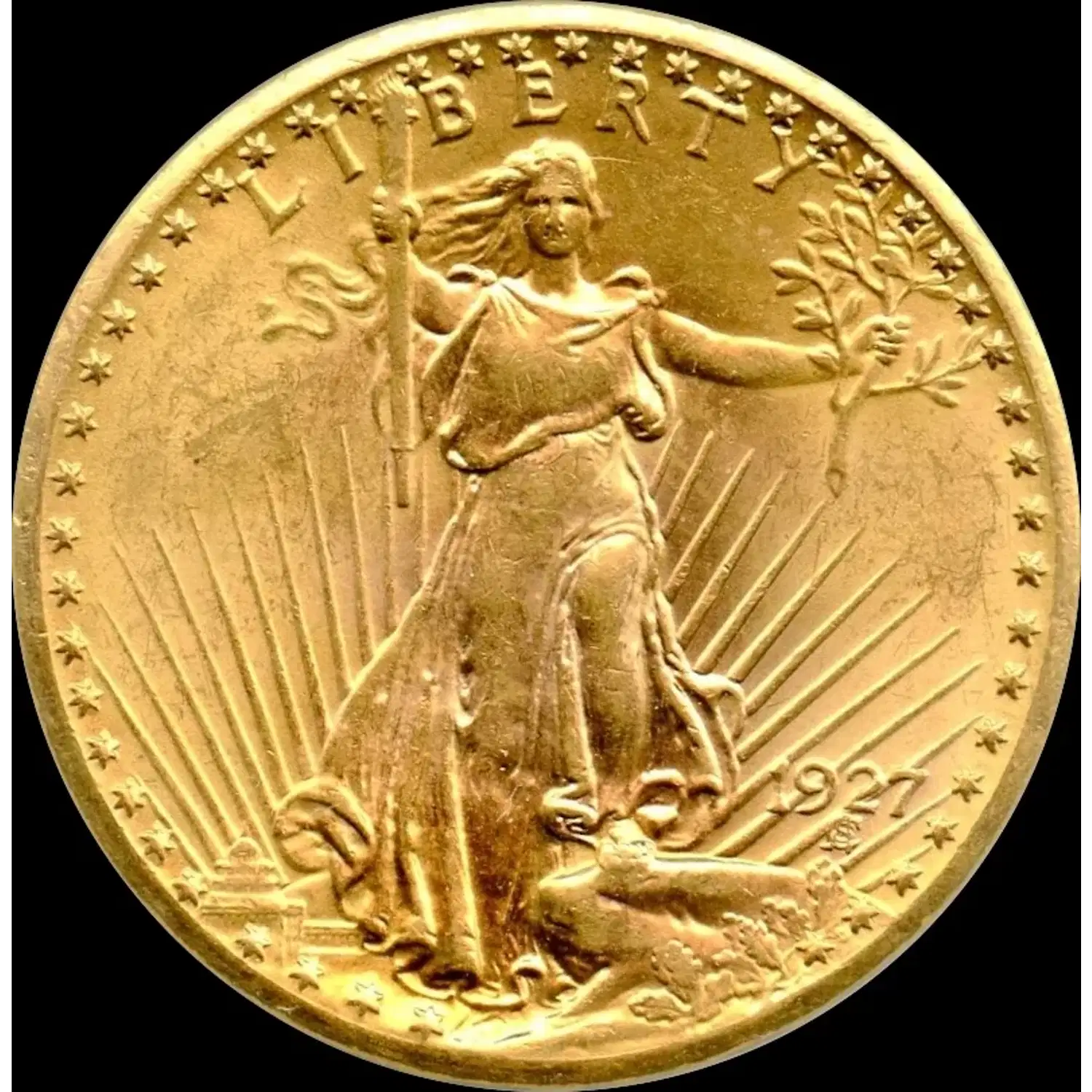
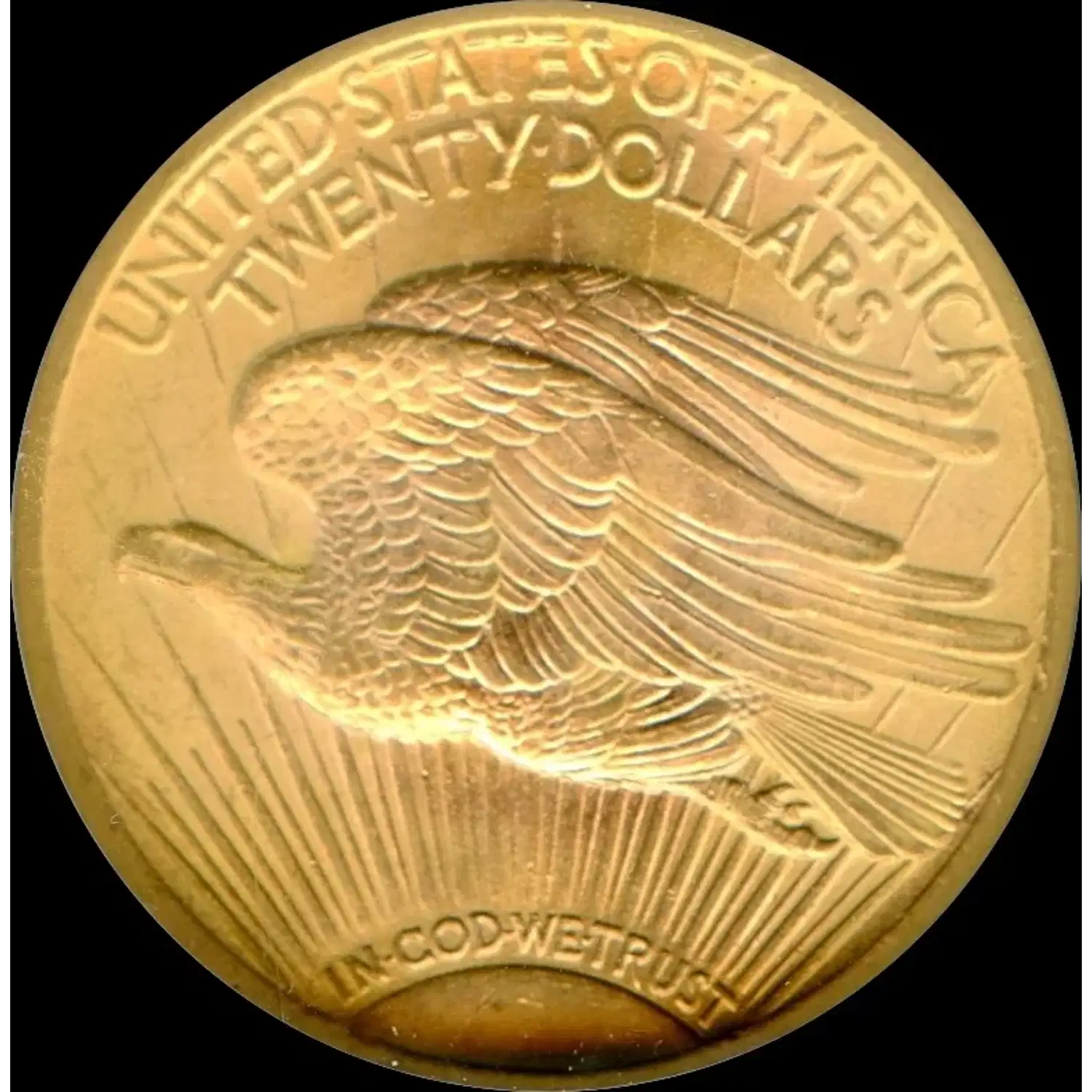
This attractive presentation set from the "Coin Medals" series pairs a 1927 Saint-Gaudens double eagle with a large silver medal honoring the coin's designer. The double eagle is a Superb Gem Uncirculated example, or very nearly so. It shows rich, satiny yellow-gold luster and a bold strike, and Liberty and the flying eagle are free of any distracting marks. The 1927 Philadelphia issue is the classic type coin of the series, and it would be hard to find a finer one to represent Saint-Gaudens's masterpiece, which Theodore Roosevelt commissioned as part of his effort to bring artistic distinction to American coinage. Gold, silver and white acrylic make the set a striking display piece, and it presents the coin the way it was meant to be seen: as a work of sculpture.
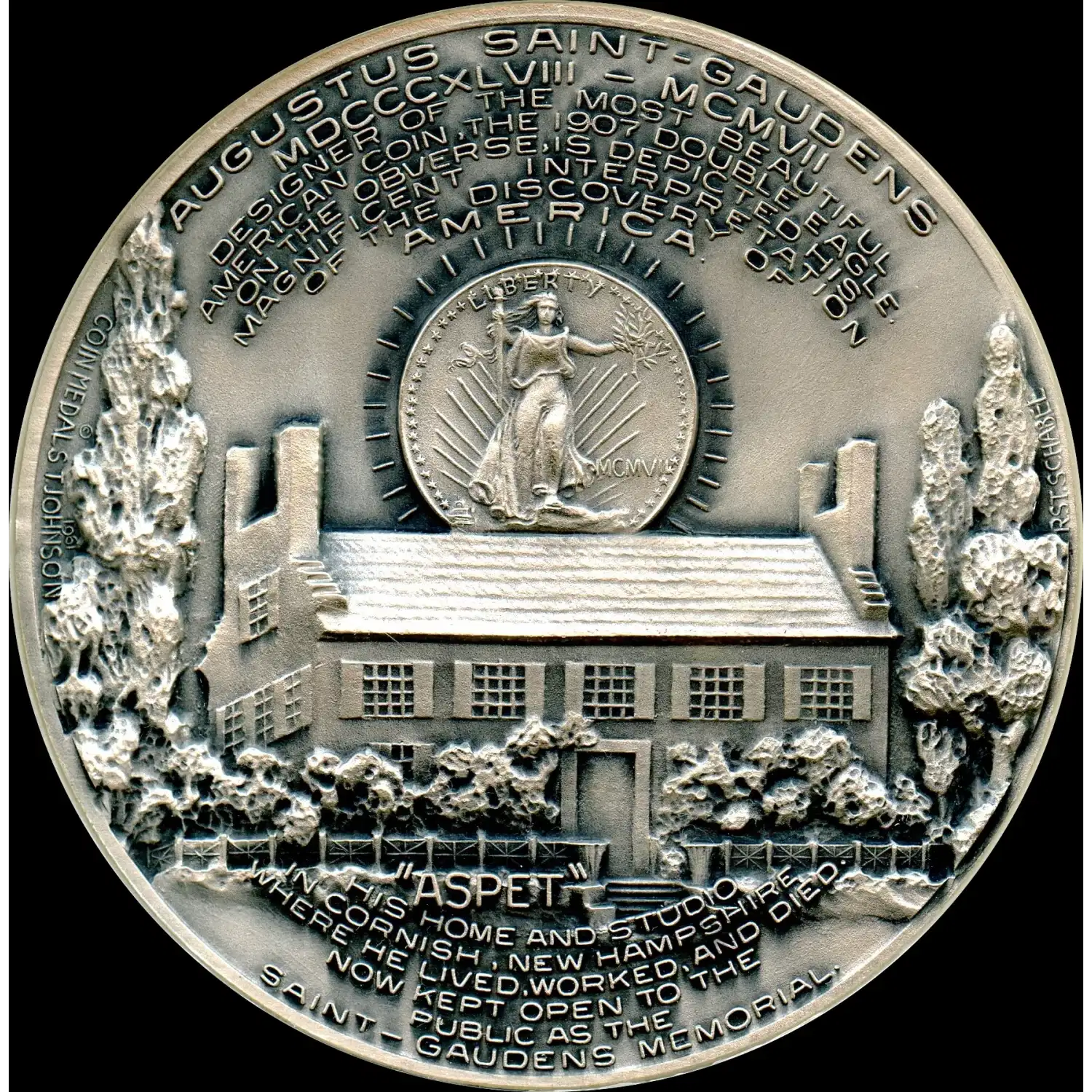
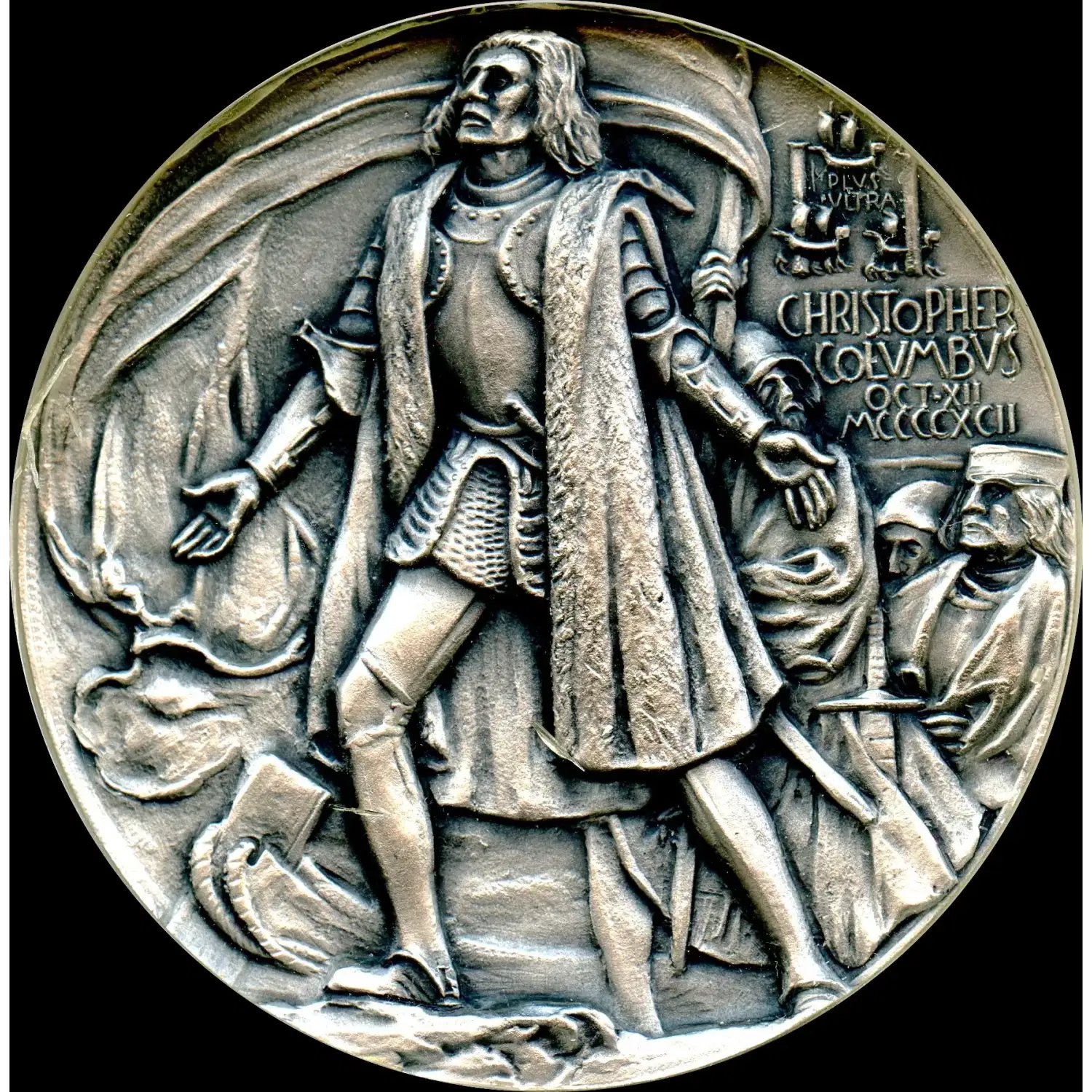
The companion medal was struck in silver by the Medallic Arts Company in 1970 and finished with a soft, antiqued surface that brings out its high relief. One side reproduces Saint-Gaudens's design for the 1892–93 World's Columbian Exposition award medal. Columbus steps ashore in armor and a fur-trimmed cloak with his arms outstretched, a banner and attendants behind him, and the Pillars of Hercules with ships and PLVS VLTRA above the legend CHRISTOPHER COLUMBUS OCT·XII·MCCCCXCII. The other side shows "Aspet," the sculptor's home and studio in Cornish, New Hampshire, rendered in detail among trees and gardens. Above the house is the 1907 Roman-numeral (MCMVII) High Relief double eagle in a radiant burst, framed by the legend AUGUSTUS SAINT-GAUDENS MDCCCXLVIII–MCMVII. The inscription calls him the designer of the most beautiful American coin and notes that the Columbus scene on the other side is his interpretation of the discovery of America. Text below the house records that he lived, worked and died at Aspet, which is now open to the public as the Saint-Gaudens Memorial.
Related products


Customer Reviews
250,000+ Reviews
‘’AU Capital Management, LLC is a leading supplier of rare coins, paper money and precious metals. Committed to authenticity, they strive to serve customers with high-quality goods they'll treasure..’’
 Verified Customer
‘’AU Capital Management, LLC is a leading supplier of rare coins, paper money and precious metals. Committed to authenticity, they strive to serve customers with high-quality goods they'll treasure..’’
Verified Customer
‘’AU Capital Management, LLC is a leading supplier of rare coins, paper money and precious metals. Committed to authenticity, they strive to serve customers with high-quality goods they'll treasure..’’
Verified Customer
‘’AU Capital Management, LLC is a leading supplier of rare coins, paper money and precious metals. Committed to authenticity, they strive to serve customers with high-quality goods they'll treasure..’’
Verified Customer
‘’AU Capital Management, LLC is a leading supplier of rare coins, paper money and precious metals. Committed to authenticity, they strive to serve customers with high-quality goods they'll treasure..’’
Verified Customer